
Trim Details That Actually Match
Finish Carpentry & Custom Trim Work in Lafayette for homes needing crown molding, baseboards, and interior detailing that align correctly
Crown molding installation requires coping inside corners rather than mitering them, because walls and ceilings rarely meet at perfect ninety-degree angles and wood movement opens mitered joints over time. JC Construction Solutions provides finish carpentry and custom trim work throughout Lafayette, handling the measurements and cutting techniques that produce tight joints in rooms where walls are out of plumb or ceiling heights vary. Properties with baseboards that show gaps at the floor, crown molding with visible separation at corners, or rooms lacking the architectural detail that defines finished interior spaces need trim installation or upgrades.
The work involves measuring wall and ceiling angles with protractors or digital levels, cutting profiles that fit together at inside corners by coping the end grain to match the molding face, and fastening trim to wall studs or ceiling joists rather than just drywall. Wainscoting installation includes furring the wall to create a flat plane, installing panels or beadboard, and adding chair rail and baseboard that align horizontally even when floors slope.
Schedule a property evaluation to review room dimensions and discuss trim profile options.
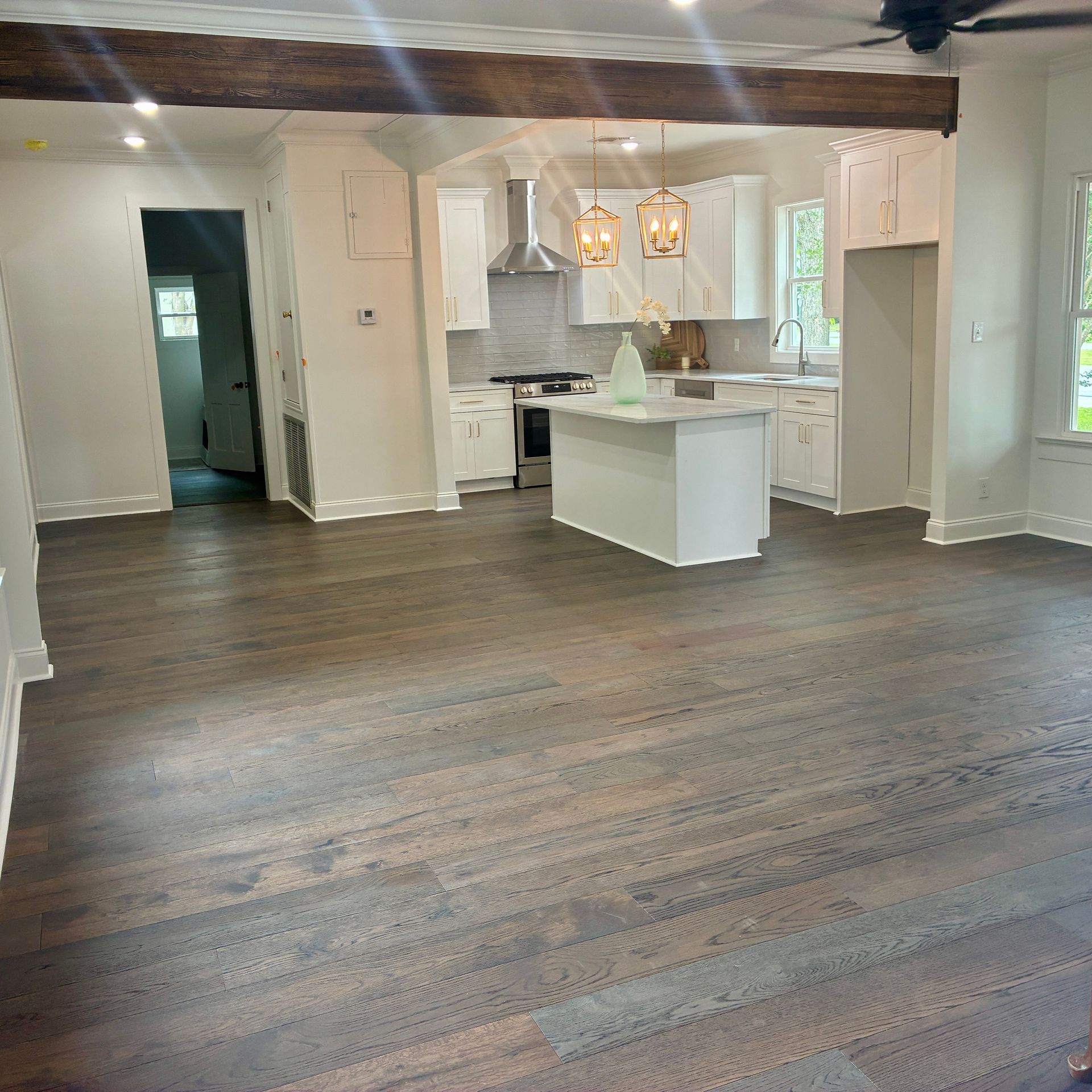
Why Precision Craftsmanship Works for Interior Detailing
Finish carpentry addresses the visual details that define a room's appearance—joints must close tightly enough that they remain sealed after paint or stain is applied, and trim must sit flat against walls without gaps caused by drywall irregularities or framing that bows. Custom built-ins involve scribing cabinets or shelving to fit walls that are not plumb, installing face frames that align with adjacent trim, and finishing edges with molding that conceals gaps while allowing access for future adjustments.
After trim installation is complete, corners meet without visible gaps or misaligned profiles, and baseboards follow floor contours closely enough that the reveal between trim and flooring remains consistent across the room length. Crown molding creates clean shadow lines at the ceiling, casing around doors and windows sits flush against both jambs and wall surfaces, and decorative trim elements like chair rails run level or follow intentional reveals without wavy sections that indicate poor layout.
Interior detailing includes door and window casing that frames openings, chair rails that protect walls in dining areas, and decorative trim applications that add visual interest to flat wall expanses. Wainscoting provides durable wall covering in high-traffic areas and adds traditional detailing in formal rooms. Precision craftsmanship ensures that stain-grade trim shows tight joints without filler, and paint-grade trim accepts finish coats without visible fastener holes or gaps.
What Property Owners Usually Ask
Trim projects involve material choices, installation techniques, and finish options that affect both appearance and how joints hold up over time.
What is the difference between coping and mitering inside corners?
Mitering cuts both pieces at forty-five degrees to form a corner joint, but this gap opens as wood shrinks or walls shift—coping involves cutting one piece to follow the profile of the other so the joint closes mechanically and remains tight even if the wood moves slightly.
How are baseboards installed on uneven floors?
The baseboard is scribed to follow the floor contour by holding it level and marking the gap profile, then cutting along that line so the bottom edge fits tightly against the floor while the top edge remains straight and level for visual consistency.
When should trim be stain-grade versus paint-grade?
Stain-grade trim uses higher-quality wood with consistent grain and minimal defects because the finish is transparent, while paint-grade trim can include finger-jointed sections or medium-density fiberboard that accepts paint well but would show glue lines and grain variation under stain.
What fastening methods prevent trim from pulling away from walls?
Finish nails driven into wall studs or ceiling joists provide structural holding power, while nails driven only into drywall rely on friction and will pull out over time as the wood shrinks or the building settles, especially with heavier crown profiles.
Why does wood selection matter for custom built-ins in Lafayette?
Hardwoods like poplar or oak resist denting and provide screw-holding strength for shelving and cabinet frames, while softwoods may compress at hinge locations or sag under load, and all wood should be primed or sealed on all sides to resist moisture absorption in humid interior conditions.
JC Construction Solutions installs trim with attention to joint fit and fastening locations that resist movement. Arrange a consultation to discuss trim profiles and built-in options for your interior spaces.